Paint is the single highest-return improvement a homeowner can make. A fresh coat changes how a room feels, protects exterior surfaces from weather damage, and adds real value without a major renovation budget. Yet most homeowners either attempt it themselves — and end up with roller marks, crooked cut lines, and a finish that looks DIY — or assume they need to book a specialty painting company and wait weeks for an opening.
There’s a third option. A skilled handyman handles the full range of painting services: interior rooms and ceilings, trim and doors, cabinets, full exterior repaints, decks, fences, and everything in between. At HomePro Handyman, our technicians bring 10+ years of hands-on painting experience to every project, with the surface preparation, product knowledge, and attention to cut lines that separate a professional finish from a paint job.
What Painting Scope Looks Like for a Handyman
The distinction between handyman painting and a specialty painting contractor comes down to project scale, not skill. Large commercial painting contracts, multi-building exterior projects requiring scaffolding and crews working in shifts over several weeks — those belong with a dedicated painting company. Residential painting of any size, from a single accent wall to a full interior repaint to a complete exterior refresh, is well within handyman scope. So is everything in between: cabinet refinishing, deck staining, fence painting, garage doors.
The advantage of going through a handyman for painting is flexibility. When a room needs a drywall patch before paint, or a cabinet door needs a hinge adjustment before it can be properly painted, the same technician handles it. There’s no coordinating between trades or waiting for a second appointment.
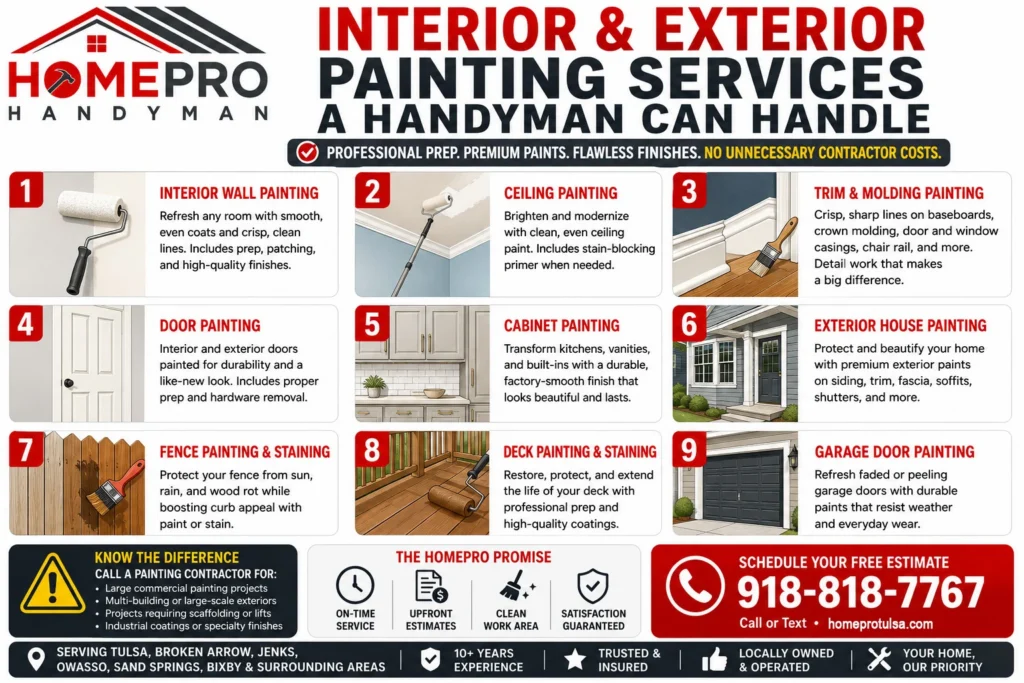
1. Interior Wall Painting
Interior wall painting is the most common residential painting service and one that benefits enormously from proper preparation and execution. It starts with surface assessment — filling nail holes, repairing hairline cracks, sanding smooth any rough patches — because paint amplifies imperfections rather than hiding them. Furniture and floors get covered before a drop of paint opens.
The actual painting involves cutting in at ceilings, baseboards, and corners before rolling the field — the sequence that creates clean edges without tape marks or bleeding. The finish coat goes on in consistent sections with a wet edge maintained throughout, which is what eliminates lap marks and roller texture. Most rooms take one to two days including prep.
2. Ceiling Painting
Ceiling painting gets skipped more often than it should. A dingy ceiling pulls down the entire room, and fresh ceiling paint is one of the most cost-effective improvements in any interior repaint. It requires specific technique — working in small sections with a heavily loaded roller to avoid dry-edge marks, and maintaining consistent pressure throughout — which is why DIY ceiling paint jobs often show lap marks and uneven sheen.
Stained ceilings are a separate consideration. Water stains from a previous leak, smoke discoloration, or grease migration from a kitchen that gets heavy use all require stain-blocking primer before topcoat. Skipping that step means the stain bleeds through regardless of how many finish coats go on top. Textured ceilings and popcorn ceilings can be painted as well, using rollers with a heavier nap to get into the texture without flattening it.
3. Trim & Molding Painting
Trim is where the professional finish either comes together or falls apart. Baseboards, crown molding, door and window casings, chair rail, wainscoting — these are the details that frame every other surface in a room, and they require steady hands, the right brush, and the patience to cut a clean line. Semi-gloss or gloss paint is standard on trim because it holds up to cleaning and creates a contrast that makes the wall color read better.
The common failure point in trim painting is rushing the cut line — where the trim meets the wall — and ending up with a ragged edge that has to be touched up repeatedly. A technician who has painted hundreds of rooms of trim develops the muscle memory to pull a consistent line at production speed.
4. Door Painting
Doors take more daily abuse than any other painted surface in a home. Every opening and closing creates friction at the edges, and the hardware areas get handled constantly. The result is paint that chips, scuffs, and wears unevenly — usually around the knob and along the bottom rail first.
Interior door painting done properly involves removing the hardware before painting rather than cutting around it, painting all six faces of the door including top and bottom edges, and allowing full dry time before rehinging. Exterior door painting adds a primer step and a topcoat formulated for temperature cycling and UV exposure. When painting an existing door in place, the technician works quickly on each section to avoid lap marks — or pulls the door entirely and paints it flat, which produces the most consistent result.
5. Cabinet Painting
Cabinet painting is the most labor-intensive painting service on this list, and also the one with the highest visual payback. A kitchen where the cabinets are painted a clean white or a contemporary two-tone looks like a different kitchen — without new doors, new boxes, or a contractor budget. The same applies to bathroom vanities and laundry room built-ins.
The reason cabinet painting fails when it’s done poorly is prep. Grease, residue, and surface contamination prevent paint adhesion, and the result is a finish that chips off the first time something bumps a cabinet edge. The right process involves degreasing, sanding to scuff the existing finish, priming with an adhesion primer, and applying a durable topcoat in thin coats. Doors and drawer fronts get removed and painted flat to avoid drips and sags. The result is a hard, cleanable finish designed for heavy-use surfaces.
6. Exterior House Painting
Exterior painting protects a home’s structure as much as it updates its appearance. Paint is a moisture barrier. When it fails — peeling, cracking, chalking — water finds its way into siding, trim, and the framing beneath, and what started as a cosmetic issue becomes a structural one. Repainting on schedule is maintenance, not just aesthetics.
The service page scope covers siding of all types — wood, vinyl, fiber cement — along with trim, fascia, soffits, shutters, and accent surfaces. Surface preparation is more involved on exteriors: washing, scraping loose paint, sanding, caulking gaps at trim and penetrations, and spot-priming bare wood before topcoat. Product selection matters more outdoors as well — exterior paint formulated for Oklahoma’s climate accounts for UV intensity, temperature swings, and humidity in ways that interior paint can’t.
7. Fence Painting & Staining
A wood fence weathers fast in Oklahoma. The combination of intense summer sun, humidity during storm season, and freezing temperatures in winter cycles moisture in and out of the wood repeatedly — checking the surface, graying the color, and eventually causing rot in posts and boards that don’t have adequate protection.
Fence painting and staining are both protective treatments, and the choice between them comes down to the look and the wood’s current condition. Paint provides a more opaque, finished appearance and a harder surface barrier. Stain penetrates the wood and allows the grain to show through, and it’s typically the better choice for weathered or rough-sawn wood that hasn’t been previously painted. Either way, proper prep — cleaning the wood, treating any mildew, allowing full drying time before application — determines how long the treatment lasts.
8. Deck Painting & Staining
Decks are painted or stained less often than they should be, and the consequences are visible: grey, cracked boards, nail pops, splintering surfaces. Deck coating isn’t optional maintenance — it’s what keeps the wood structurally sound and the surface safe to walk on barefoot.
Deck painting and staining requires more preparation than almost any other painted surface. The deck needs to be cleaned, often pressure-washed first to remove dirt and previous coating residue, and any damaged boards need to be replaced before coating. Applying stain or paint over a deteriorated or dirty surface is one of the most common mistakes in residential painting — the coating won’t bond properly and will peel within a season. When prep is done correctly, a quality deck stain holds up for several years in Oklahoma conditions.
9. Garage Door Painting
Garage doors cover more square footage than most homeowners realize — on a two-car garage, the door can be 16 feet wide and seven feet tall. A faded, peeling, or oxidized garage door is one of the most visible elements of a home’s curb appeal, and fresh paint makes an outsized difference in how the front of a house reads from the street.
Metal garage doors require paint formulated for metal — standard latex doesn’t adhere well to bare metal or galvanized surfaces and will peel quickly. Wood garage doors follow a similar process to exterior wood: prime, caulk any gaps, topcoat with a durable exterior product. Color matching to existing trim or front door hardware ties the exterior together.
What to Expect From HomePro Handyman
Every technician on the HomePro team brings more than a decade of painting experience. They arrive on time, in uniform, and begin with a surface assessment before any paint opens — because the finish is only as good as the preparation underneath it. Furniture and floors are fully protected throughout. When the job is done, your technician walks through the work with you in proper lighting, and the space gets cleaned up completely before they leave.
HomePro serves Tulsa, Broken Arrow, Jenks, Owasso, Sand Springs, Bixby, and the surrounding area. Get your estimate today.